
Dialogue Democrats Slam 25% Sanctions on India, Ask “Why Not on China?” – Former Officials Express Disappointment, Call for
The Trump administration intensified its condemnation of the Ukraine conflict, calling it “Modi’s war,” just one day after the United States placed additional 25% secondary penalties on India for buying Russian oil, on top of a 25% reciprocal tariff. The Democratic Party, America’s opposition party, vehemently opposed the action, stating that “isolating India will also hurt the U.S.”
Concern was raised by former U.S. officials, including former ambassador Kenneth Juster, who said they hoped the matter would be handled at the highest level, perhaps even by meeting with Prime Minister Narendra Modi and President Donald Trump. Since the United States stopped bilateral collaboration with India in 1998 due to India’s nuclear testing, these punitive tariffs represent the most extensive sanctions against the country. Mr. Trump had previously taken away India’s Generalised System of Preferences (GSP) trade incentives in 2019.
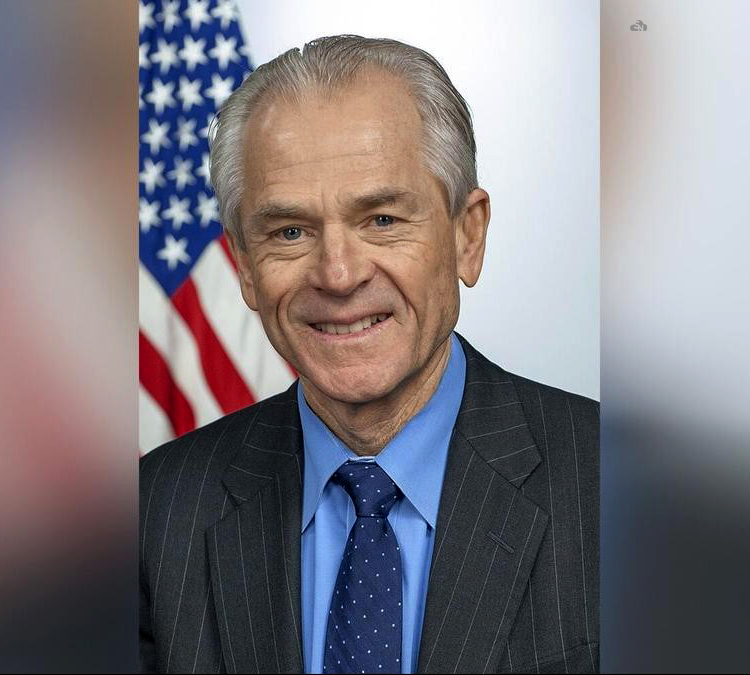
Peter Navarro, Trump’s trade advisor and the driving force behind the tariff campaign, stated:
“India can immediately receive relief from the 25% tariff if it agrees to stop purchasing [Russian] oil and powering the war machine.”
He pointed to the Vadinar plant in Gujarat and accused Indian negotiators of lying about tariffs, being “arrogant” by refusing to reduce imports of Russian oil, and even making money by refining Russian crude in collaboration with Russian refineries.
Navarro stated to Bloomberg:
“India’s actions are hurting everyone in America.” India’s high tariffs are hurting businesses and consumers, workers are losing their jobs and income, and taxpayers are suffering since we are funding Modi’s war.
He further said that India was siding with “authoritarians like China and Russia.”
Trump-Modi ties Nonetheless, the relationship is “complex.”
U.S. Treasury Secretary Scott Basent characterised the relationship between the United States and India as “complicated,” pointing out that the problem extends beyond Russian energy and includes India’s inability to complete a trade agreement. India was supposed to be among the first nations to reach an agreement, but instead decided to take advantage of the lower prices for Russian crude, he claimed in an August 27, 2025, interview with Fox News. Additionally, he noted that these developments have caused the Indian rupee to drop to its lowest level ever.
China’s exemption is questioned by Democrats.
Using the claim that China purchases more Russian oil than India, Democrats senators criticised the Trump administration. China actually upped its intake last month after India cut back on its purchases.
Democrats on the House Foreign Affairs Committee posted the following on X (previously Twitter):
“Trump is targeting India with tariffs—harming Americans and deteriorating U.S.-India relations—instead of imposing sanctions on China or other countries that import massive volumes of Russian energy. This no longer even appears to be about Ukraine.
Ex-officials Voice Their Displeasure
The decision to impose 50% tariffs on Indian imports on August 27 disappointed a number of former U.S. officials who had previously worked on India ties.
Now an advisor with The Asia Group and the U.S.-India Strategic Partnership Forum, former U.S. trade negotiator Mark Linscott stated:
“Sadly, what could have been a genuine win-win trade relationship has been transformed into an incredible lose-lose scenario by the U.S. and India.”
He called for the victory of “cooler heads who understand the value of the relationship.”
The Council on Foreign Relations was informed by Kenneth Juster, the former U.S. Ambassador to India during Trump’s first term, that Trump has long felt that the U.S.-Indian economic relationship has been “imbalanced” for years.
He went on to say:
Modi has to react to the increased tariffs with firmness and in public, especially considering India’s thriving political discourse. However, he must also exercise caution to avoid confining himself and instead remain receptive to discussions that could settle the conflict. Democrats
Juster expressed his hope that Trump and Modi will have a meeting in September at the United Nations General Assembly (UNGA).
Government representatives did clarify, though, that PM Modi does not currently have any plans to visit the United States for the UNGA.